Alexander Stark (*1986) lives and works as a multidisciplinary artist in Austria. His practice
is characterized by conceptual and transdisciplinary approaches. Through spatiality,
material research, and scalar intervention, his works encourage questioning perceptions of
reality and reconsidering one's worldview. With "DON'T YOU SEE," he develops an
exhibition that does not treat seeing and understanding as self-evident capabilities but
rather as something fragile and situative. Vision emerges not as immediate recognition but
as a process requiring time, movement, and attention. The works unfold their effect not at
first glance but through the interplay of body, space, material, and light.
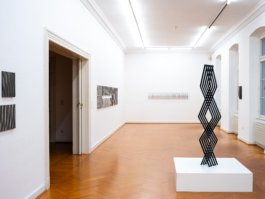
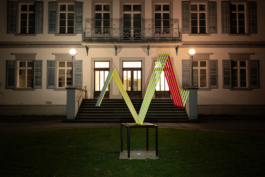
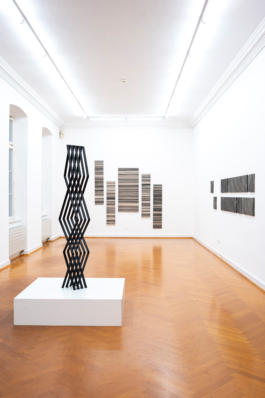
Already in the exterior space of the artist's residence, Stark employs reduced and precise
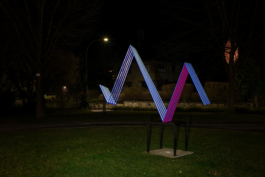
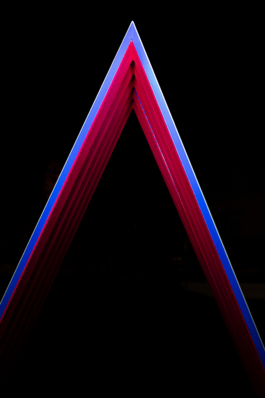
forms. A striking metal sculpture introduces the exhibition's theme in an objective manner,
without expressive gesture. In its simplicity, it evokes the language of Minimal Art, which
operates through repetition, measure, and presence. One's own vantage point becomes
palpable, and the body finds itself inevitably in relation to the work. "FLASH"
(2026) visible often only for a moment is arrested at this instant, and the sculpture
permits circumnavigation and subjective temporal perception.
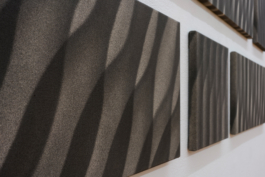
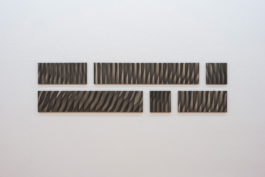
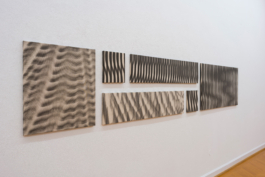
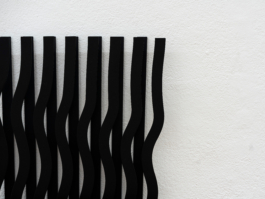
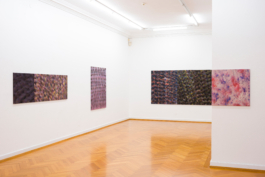
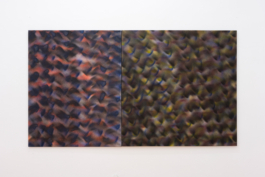
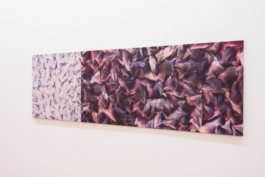
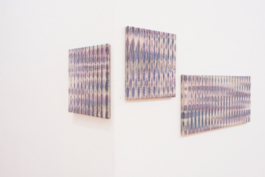
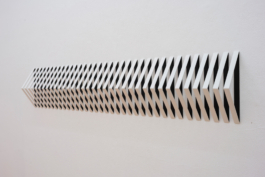
In the large left room, the individual experience of the works intensifies. Metal sculptures
encounter paintings with moiré effects. Arranged in rigorous sequence, edge against edge,
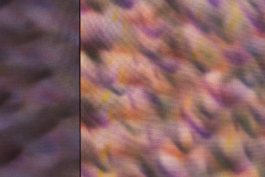
they create a surface density of layers, grids, and stratifications. Depending on one's
viewpoint, the surfaces begin to shimmer, shift, or pulsate. These optical displacements do
not result from movement of the works themselves but from the activity of viewing and
perception: the eye scans, momentarily loses stability, and recalibrates. While Stark
develops his work through a strict system of geometric forms, each viewer generates an
entirely unique reality of perception, contingent upon rhythm, velocity, and angle of view.
Reality becomes a relative phenomenon, dependent on the observer's position.
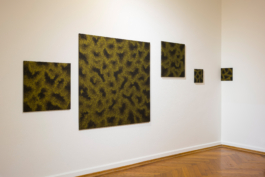
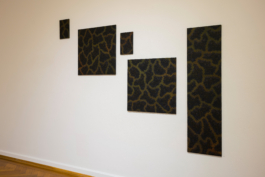
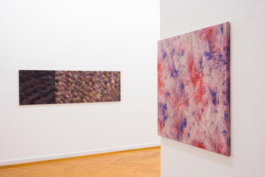
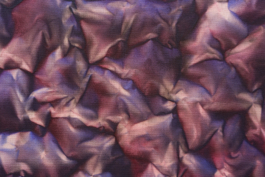
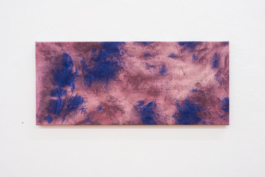
In the central room, focus shifts from clear grid systems toward organic structures. The
works engage principles of growth, density, and branching without establishing naturalistic
reference. Forms visualize processes of becoming without establishing naturalistic
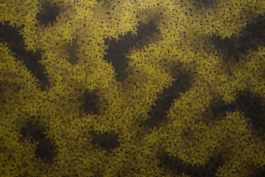
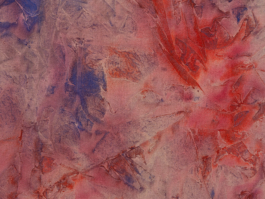
connections. From distance, the stamped surfaces appear calm and homogeneous; from
proximity, depths and irregularities open up. The intense luminosity of the pigments
employed in the color creates a stark effect. The images appear, from one perspective,
overlaid with a transparent haze, while from another vantage point they are marked by
sharp contrasts. The space demands decelerated seeing a sensitive response to
transitions, tensions, and intensifications.
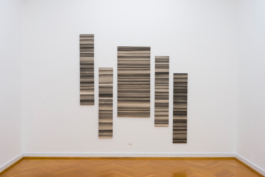
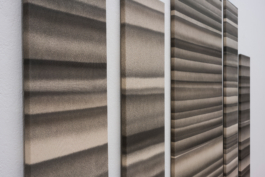
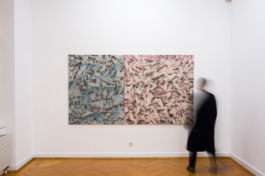
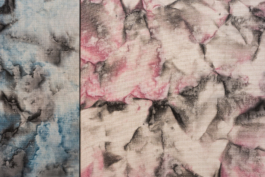
On the park-facing side, a contemplative situation emerges. Combined works from various
series engage subtle color gradations, reliefs, and universal ordering systems. The works
appear less as classical panel paintings than as rhythmic arrangements whose logic unfolds only
through extended viewing. Light and material here maintain a restrained,
carefully calibrated relationship. Where the opposite room confronted seeing actively as
bodily sensation, Stark in this space emphasizes the theme of introduction. An
atmosphere emerges that does not aim at recognizing patterns and rules but at cultivating
a sense of connection.
"DON'T YOU SEE" assembles no closed statements. Rather, the exhibition creates
conditions under which perception becomes experienced as an active, embodied process.
It invites one to tolerate uncertainty, question viewing habits, and shift between distant and
proximate sight. The focus is not on rapid comprehension but on gradual
perception - precise, open, and without guidance.
Text: Anne Zühlke